
ERW Welded Pipe is widely recognized as one of the most essential products in the steel manufacturing and construction industries today. Its popularity continues to grow due to its cost efficiency, durability, and wide range of applications across different sectors. From oil and gas transportation to structural engineering, ERW welded pipe plays a critical role in modern infrastructure development. Understanding its manufacturing process, characteristics, and uses helps industries make informed decisions when selecting piping solutions for demanding environments.
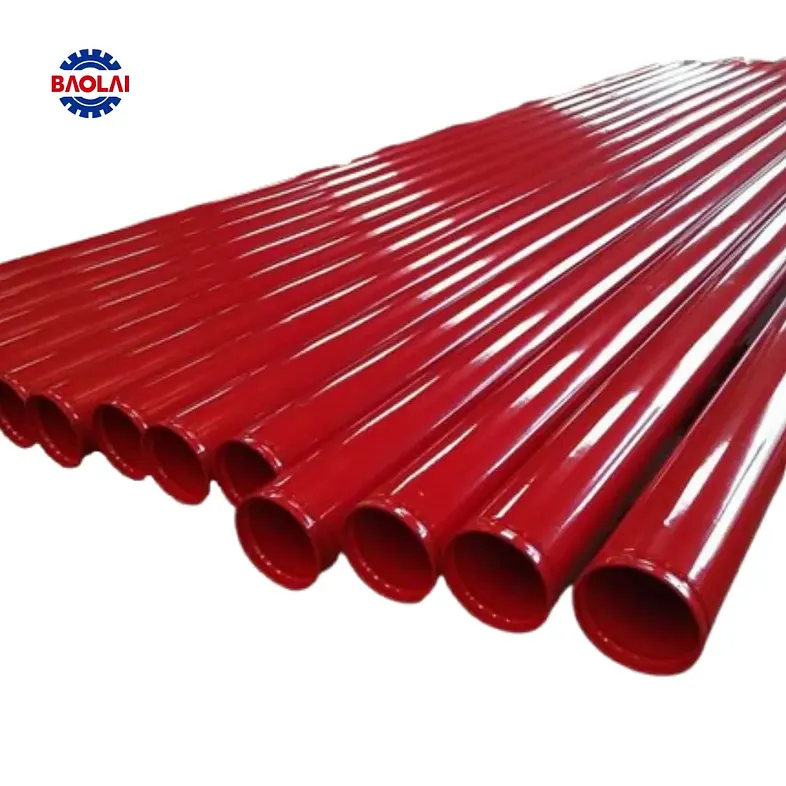
ERW Welded Pipe in Modern Steel Industry?
ERW welded pipe, also known as Electric Resistance Welded pipe, is manufactured using a specialized process where steel strips are formed into cylindrical shapes and then welded longitudinally using electric resistance heating. This method creates a strong and uniform weld without the need for filler materials, making the pipe both reliable and efficient for large-scale production.
One of the most important advantages of ERW welded pipe lies in its consistent quality. Because the manufacturing process is highly controlled, the resulting pipes exhibit uniform wall thickness and precise dimensional accuracy. This makes them suitable for applications where structural integrity is crucial. Industries such as construction, water transportation, fencing systems, scaffolding structures, and low to medium pressure pipelines frequently rely on ERW welded pipe due to these predictable properties.
Another key factor that contributes to the growing demand for ERW welded pipe is its cost-effectiveness. Compared to seamless pipes, ERW pipes are generally more economical to produce because the process uses less raw material and requires less energy. This affordability allows large infrastructure projects to maintain budget efficiency without compromising on strength and performance.
In addition, ERW welded pipe is known for its smooth surface finish and high mechanical strength. These properties make it suitable for both visible structural applications and hidden underground installations. The welding technology used ensures that the joint area is strong enough to withstand pressure, environmental stress, and mechanical loads over long periods.
Applications and Benefits of ERW Welded Pipe in Industrial Use?
ERW welded pipe is widely used in various industries due to its adaptability and performance characteristics. In the oil and gas sector, it is commonly used for transporting low-pressure fluids such as water, gas, and petroleum products over long distances. Its reliability and resistance to leakage make it a trusted option for pipeline systems that require continuous operation and safety assurance.
In the construction industry, ERW welded pipe is extensively used for structural purposes. It serves as a key material in building frameworks, columns, trusses, and support systems. Its ability to withstand heavy loads while maintaining structural stability makes it ideal for residential, commercial, and industrial construction projects. Engineers and architects often prefer ERW pipes when designing cost-efficient yet durable structures.
The automotive industry also benefits from ERW welded pipe in manufacturing components such as chassis parts, exhaust systems, and hydraulic lines. The precision and uniformity of these pipes ensure compatibility with complex mechanical systems where performance and safety are critical.
Another important application of ERW welded pipe is in agricultural and irrigation systems. It is used for water distribution networks, sprinkler systems, and drainage pipelines. Its resistance to corrosion and long service life make it suitable for outdoor environments where exposure to moisture and soil conditions is constant.
The mechanical properties of ERW welded pipe are another reason for its widespread adoption. It offers a balanced combination of strength, flexibility, and toughness. This allows it to perform effectively under varying pressure conditions without deforming or cracking easily. Additionally, advancements in manufacturing technology have significantly improved weld quality, making modern ERW pipes even more reliable than earlier versions.
From a sustainability perspective, ERW welded pipe also offers environmental benefits. The manufacturing process is more energy-efficient compared to other pipe production methods, resulting in reduced carbon emissions. Moreover, steel used in ERW pipes is recyclable, supporting eco-friendly construction practices and reducing industrial waste.
Maintenance is another area where ERW welded pipe proves advantageous. Its smooth internal surface reduces friction, which helps in maintaining consistent flow rates in fluid transportation systems. This also minimizes the risk of blockages and reduces long-term maintenance costs for industrial operators.
In terms of availability, ERW welded pipe is produced in a wide range of sizes, thicknesses, and grades. This versatility allows industries to select specific types based on project requirements. Whether it is lightweight tubing for furniture manufacturing or heavy-duty pipes for infrastructure projects, ERW pipes offer flexible solutions for diverse engineering needs.
Conclusion
ERW welded pipe has established itself as a fundamental component in modern industrial and construction applications due to its strength, affordability, and versatility. Its efficient manufacturing process, combined with excellent mechanical properties, makes it a preferred choice for engineers and industries worldwide. As infrastructure development continues to expand globally, the demand for reliable and cost-effective piping solutions like ERW welded pipe is expected to grow even further.
With its wide range of applications across oil and gas, construction, automotive, and agricultural sectors, ERW welded pipe remains a vital material supporting modern development. Its balance of performance, sustainability, and economic value ensures that it will continue to play an important role in shaping the future of steel-based infrastructure systems.